Astronomy just crossed a subtle but meaningful threshold: not just detecting distant worlds, but beginning to read their surfaces.
Using the James Webb Space Telescope, astronomers have directly measured heat emitted from the surface of the exoplanet LHS 3844 b—a rocky “super-Earth” about 50 light-years away. That might sound incremental, but it shifts exoplanet science from atmospheric speculation toward something closer to planetary geology.
Most exoplanet studies rely on atmospheres as proxies. Gases absorb and emit light in recognizable ways, making them easier to analyze. But LHS 3844 b doesn’t play along—it appears to have no atmosphere at all. That limitation becomes an opportunity: without a gaseous veil, the telescope can pick up thermal radiation directly from the planet’s surface.
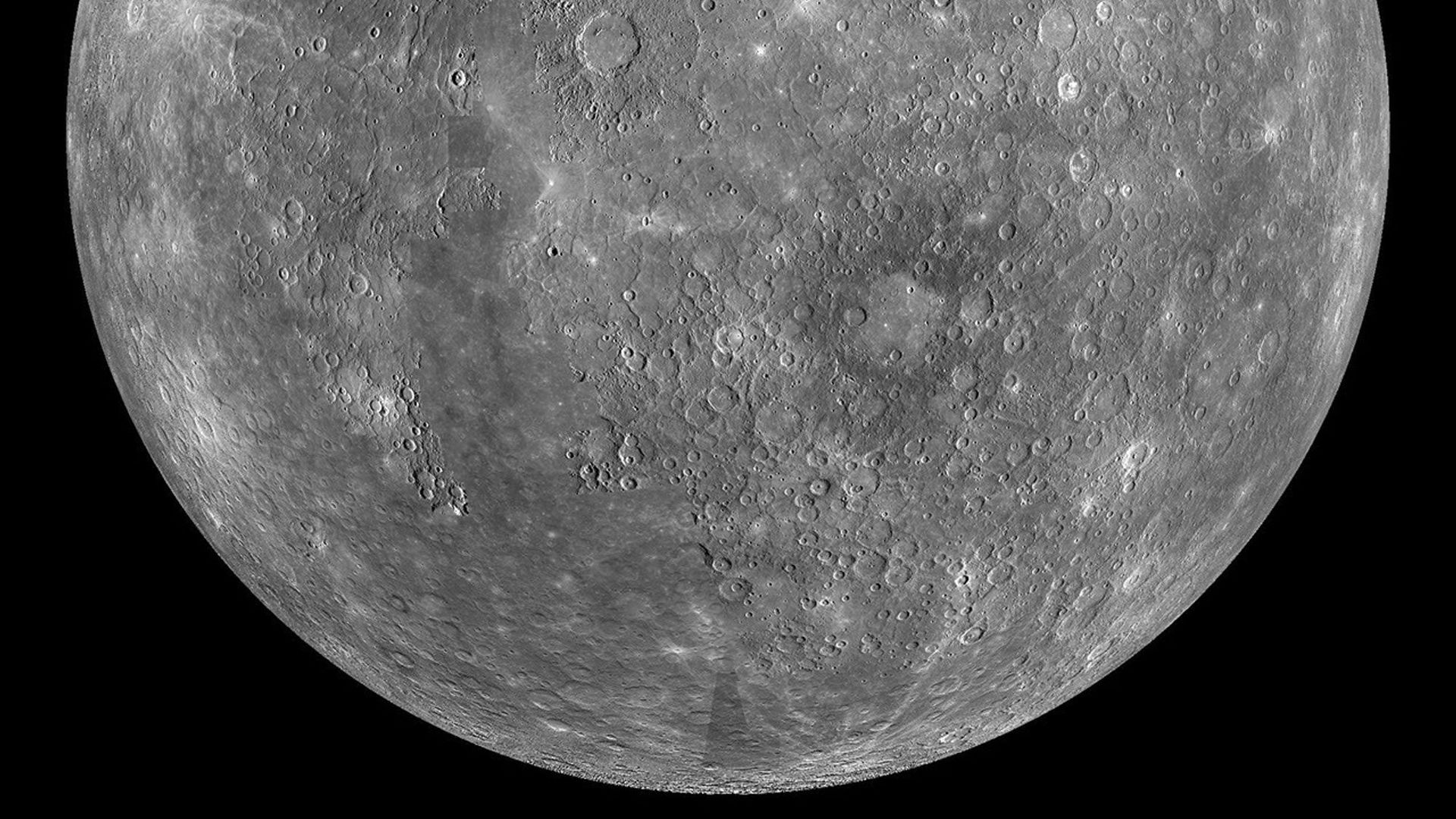
As described in the report, what emerges is a stark picture: a dark, hot, airless world, likely dominated by basalt—volcanic rock rich in iron and magnesium. Think less Earth, more Mercury or the Moon.
The observation strategy is clever. Researchers, led by Laura Kreidberg, tracked “secondary eclipses,” moments when the planet slips behind its host star. By comparing the system’s infrared light before and during these eclipses, they isolate the planet’s contribution. The instrument doing the heavy lifting—JWST’s Mid-Infrared Instrument (MIRI)—is sensitive enough to detect subtle thermal signatures from a world tens of trillions of kilometers away.
What they didn’t find is just as telling.
No detectable atmosphere means no measurable carbon dioxide or sulfur dioxide—gases typically associated with volcanic outgassing. That leaves two competing interpretations:
- A geologically young surface, recently resurfaced by lava flows that haven’t yet weathered.
- Or the opposite: a long-dead surface coated in fine, dark material produced by relentless micrometeorite impacts and radiation—what’s known as space weathering.
Both scenarios point to a planet with little to no water. And without water, you lose the geological processes that shape Earth’s crust—no plate tectonics, no recycling of minerals, no granite-rich continents.
There’s also an extreme environmental factor: LHS 3844 b is tidally locked, orbiting its star every 11 hours. One hemisphere is permanently scorched, reaching about 725°C, while the other sits in perpetual darkness. That kind of thermal contrast further limits atmospheric stability and complicates surface evolution.
The broader implication isn’t about this one planet being particularly interesting—it’s about the method working.
Direct surface characterization of rocky exoplanets has long been out of reach. JWST’s sensitivity is now pushing into that territory, allowing scientists to compare alien geology with familiar materials from Earth, the Moon, and Mars. It’s a step toward answering a deeper question: how diverse are rocky worlds, really?
Follow-up observations are already planned, aiming to distinguish whether LHS 3844 b’s surface is solid bedrock or loose, weathered material. Either way, the technique is now validated—and transferable.
If this approach scales, future observations could start building a catalog not just of exoplanets, but of exoplanet surfaces. Not atmospheres. Not indirect signals. Actual terrain.
That’s when comparisons to Earth stop being abstract—and start getting uncomfortably specific.