The most interesting part of the Chernobyl exclusion zone isn’t just that life returned—it’s that some organisms may be exploiting what should be lethal.
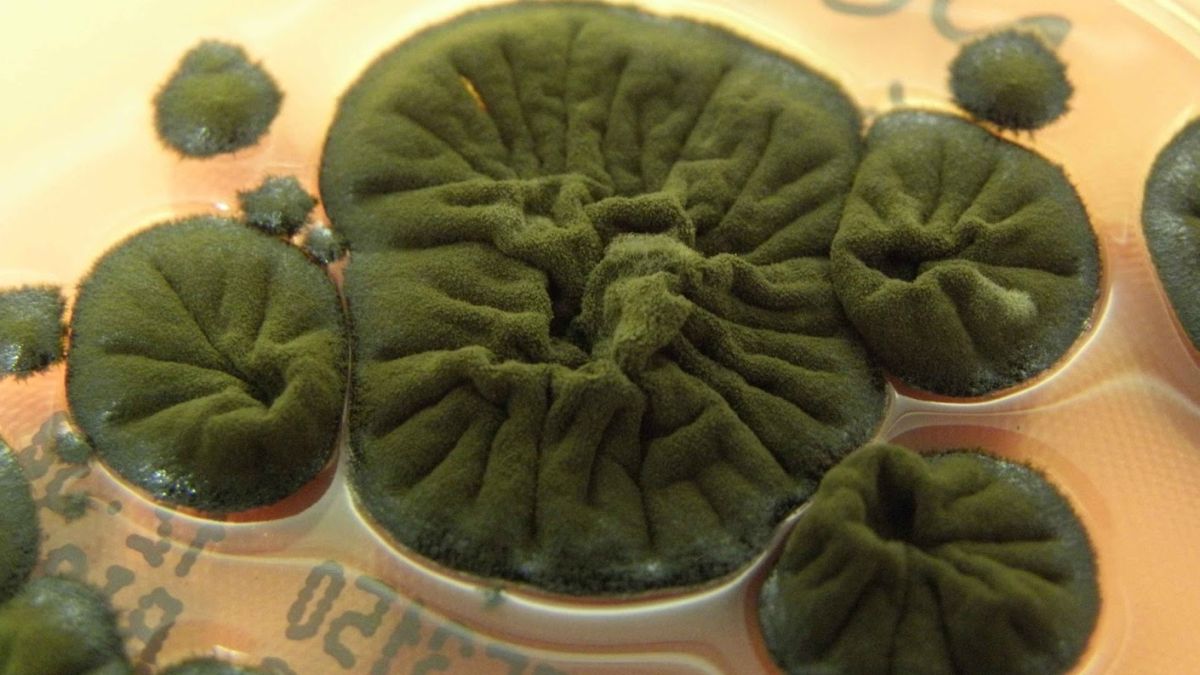
Inside one of the most radioactive environments on Earth, a black fungus—Cladosporium sphaerospermum—has been observed not merely surviving, but apparently benefiting from ionizing radiation. That alone challenges a deeply held assumption: that radiation is purely destructive to biological systems.
What makes this organism worth attention is not just resilience, but behavior that hints at a different relationship with energy.
Radiation as a Potential Energy Source
The fungus contains high levels of melanin, the same pigment responsible for dark coloration in human skin. In most organisms, melanin plays a protective role, absorbing and dissipating harmful radiation. Here, however, it may be doing something more.
Experiments have shown that C. sphaerospermum grows better when exposed to ionizing radiation. That’s not a trivial observation—ionizing radiation typically damages DNA, disrupts molecular structures, and impairs cellular function.
One proposed explanation is something called radiosynthesis: a process analogous to photosynthesis, where radiation replaces light as the energy source. In this hypothesis, melanin acts similarly to chlorophyll, interacting with radiation in a way that could support metabolic activity.
It’s a compelling idea. It’s also unproven.
As noted in the source (read more here), scientists have not yet demonstrated key indicators like radiation-driven carbon fixation or a defined biochemical pathway that converts radiation into usable energy.
What We Know vs. What We Don’t
There are a few solid observations:
- The fungus thrives in high-radiation environments.
- Melanin within the fungus changes behavior when exposed to ionizing radiation.
- Growth rates can increase under radiation exposure.
- The organism can partially attenuate radiation, as shown in experiments conducted on the ISS.
But none of these directly confirm that the fungus is feeding on radiation. It could instead be:
- Using melanin purely as a shield, reducing damage enough to survive better than competitors.
- Triggering stress-response pathways that incidentally boost growth under certain conditions.
- Exploiting ecological niches where radiation suppresses other life forms.
The distinction matters. One scenario implies a novel energy-harvesting mechanism; the others suggest adaptation and resilience without fundamentally new biology.
Not All Fungi Behave This Way
The behavior is not universal, even among melanized fungi.
- Wangiella dermatitidis shows enhanced growth under radiation.
- Cladosporium cladosporioides increases melanin production but doesn’t grow faster.
This variability suggests that whatever is happening in C. sphaerospermum is not a simple property of melanin alone. There may be species-specific metabolic or structural factors at play.
Space, Shielding, and Practical Implications
The ISS experiment adds another dimension. When placed on the station’s exterior, the fungus reduced the amount of radiation passing through it compared to a control.
That opens up a more immediately actionable possibility: biological radiation shielding.
Instead of relying solely on heavy materials, future spacecraft could incorporate living systems that:
- self-repair,
- adapt to radiation levels,
- and potentially provide passive protection.
Even if radiosynthesis remains unproven, the shielding capability alone is worth exploring.
A Useful Kind of Uncertainty
The most valuable aspect of this story isn’t a confirmed mechanism—it’s the gap in understanding.
We’re looking at an organism that:
- interacts with ionizing radiation in a non-destructive way,
- possibly converts it into something biologically useful,
- and thrives where most life cannot.
Whether that’s energy harvesting or an unusually effective survival strategy is still unresolved. But either outcome expands the boundary of what we consider biologically possible.
In environments where humans see only hazard, evolution may be quietly negotiating terms.