China’s Experimental Advanced Superconducting Tokamak (EAST) is making waves in nuclear fusion research by shattering the long-accepted Greenwald limit. This benchmark has traditionally capped the density of plasma in tokamak reactors, believed to prevent instability. But now, EAST researchers have pushed plasma densities to a staggering 30% to 65% higher than what’s typically seen.
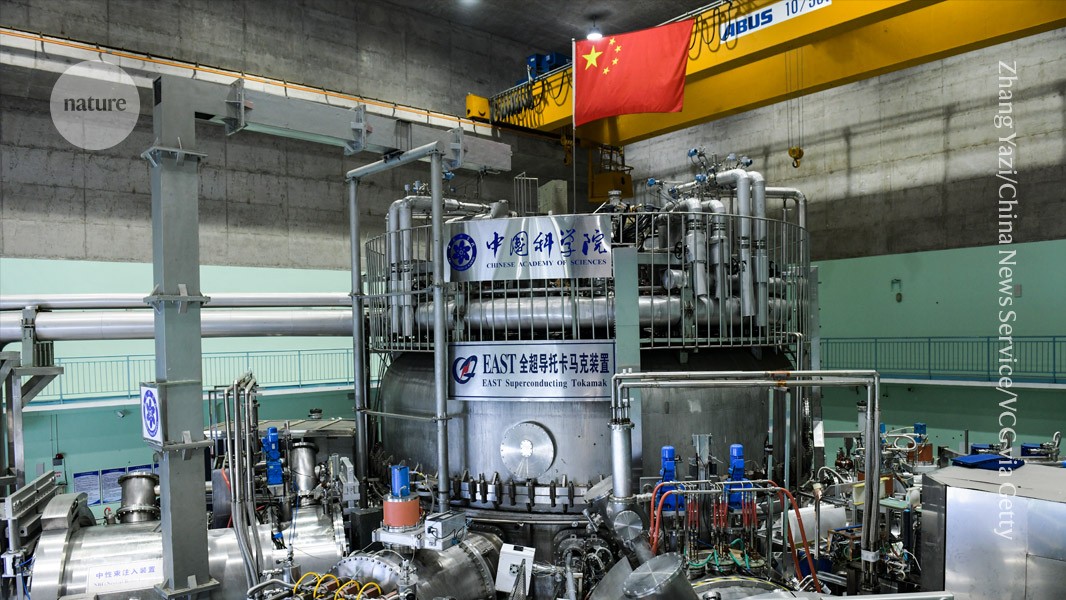
The team’s breakthrough lies in innovative tweaking: using high-power microwaves for efficient heating of initial fuel and reducing metal impurities in the plasma—a common hurdle in such reactors. By also injecting neutral gas, they beefed up the plasma density while cooling the reactor’s walls, cutting down on radiation and maintaining stability.
This advancement in achieving high-density plasma marks a tantalizing leap toward sustainable, limitless clean energy that mimics the Sun’s processes. Jeronimo Olaya from France’s Atomic Energy Commission is optimistic about these results being explored in other tokamaks. The future for fusion energy just got a little brighter, with EAST leading the charge.
Read more…