The effort to bring PlayStation 5 games to PCs is making rapid progress. AnyPS5, an open-source compatibility project designed to run PS5 software on conventional computer hardware, has reached 88.12% implementation coverage of the console’s known system library functions. The latest development statistics show a substantial jump in supported functionality, with hundreds of additional functions implemented in just a few days.
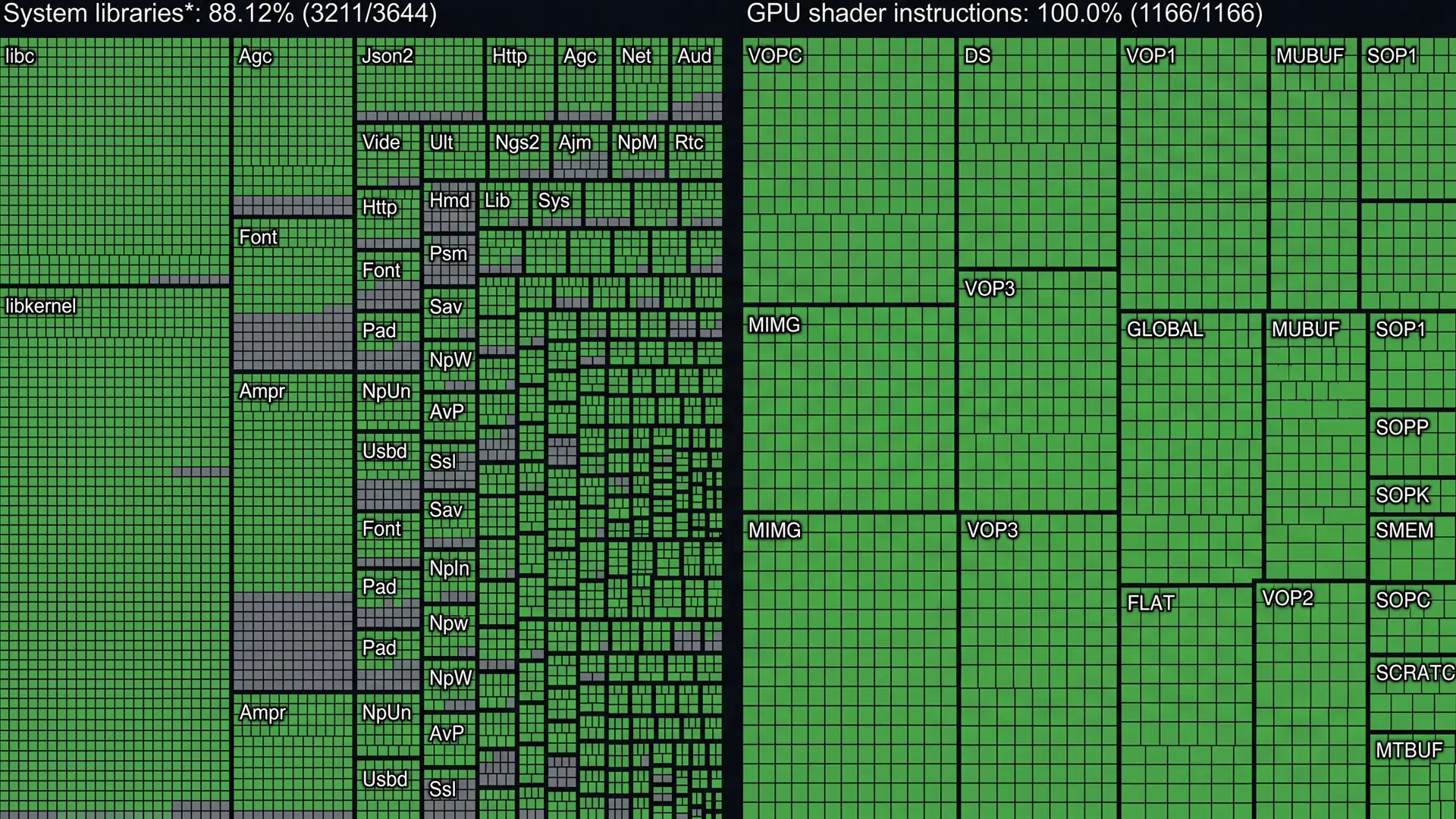
The numbers are particularly interesting because AnyPS5 is tackling one of the most complicated aspects of console compatibility: reproducing the software environment that PlayStation games expect to find when they communicate with the operating system, graphics hardware, memory, and networking components.
According to
, AnyPS5 now implements 3,211 out of 3,644 registered system functions, compared with 3,005 out of 3,475 just one day earlier. That represents 206 additional implemented functions within 24 hours, alongside 169 newly registered functions.
The increase from 86.47% to 88.12% might look relatively modest at first glance, but the underlying numbers reveal a much larger amount of development activity. The project is not simply filling gaps in a fixed list of functions. Its developers are also expanding their understanding of the PS5 software environment, identifying additional interfaces that need to be reproduced.
Core PS5 libraries are approaching full coverage
Some of the most important components of the PlayStation 5 software stack are now reporting implementation levels above 90%.
The standard C library, libc, has reached 99% coverage. This library provides fundamental operations such as memory management, string processing, and other functions used throughout software applications. High coverage here is particularly valuable because many higher-level components depend on these basic services.
Another important milestone involves libkernel, which has reached 94%. This low-level library exposes operating-system functionality to applications, making it an essential part of the compatibility environment. Correctly reproducing its behavior is critical for software that relies on system resources, threading, synchronization, and other operating-system services.
Networking support is also progressing quickly. The libSceNet library has reached 96% implementation coverage, suggesting that much of the networking interface expected by PS5 software is now represented in the project.
Graphics-related development is advancing as well, with libSceAgc reaching 90%. Graphics compatibility is especially important because the PS5 relies on a specialized AMD-based graphics architecture and console-specific software interfaces that cannot simply be passed directly to ordinary PC graphics drivers.
The reported implementation levels currently stand at:
| Component | Implementation coverage |
|---|---|
| libc | 99% |
| libSceNet | 96% |
| libkernel | 94% |
| libSceAgc | 90% |
| GPU shader instructions | 100% |
| Overall system functions | 88.12% |
GPU instruction coverage reaches 100%
One of the most notable figures in the latest statistics concerns GPU instructions.
AnyPS5 reports support for all 1,166 shader instructions currently tracked by the project, giving it 100% coverage in this particular category.
Shader instructions form part of the foundation of modern graphics processing. They describe operations used by GPU programs to calculate lighting, manipulate geometry, process textures, and produce visual effects.
Achieving complete coverage of a known instruction set is an important technical milestone, particularly when attempting to translate console-specific GPU workloads into operations that PC graphics hardware and drivers can understand.
However, 100% instruction coverage does not mean 100% graphics compatibility.
A functioning graphics compatibility layer must handle considerably more than individual shader instructions. It also needs to reproduce memory behavior, resource management, synchronization, shader compilation, graphics pipelines, and the interaction between the game engine and GPU.
An instruction can be implemented without every possible application using it behaving correctly. Performance is another challenge: accurate execution does not automatically translate into efficient execution.
Nevertheless, complete coverage of the currently documented shader instructions gives developers a stronger foundation for tackling more complicated rendering workloads.
More than 500 functions added in a matter of days
The longer-term development statistics make the recent acceleration even more apparent.
Only a few days earlier, AnyPS5 reported 2,644 implemented functions out of 3,093 known functions. The latest figures put that number at 3,211.
That represents 567 additional implemented functions over a short development period, while the total number of tracked functions increased by 551.
Such rapid growth suggests a concentrated period of implementation work. It may also reflect improved tooling, additional contributors, or the implementation of groups of related functions, although the published figures alone do not establish the precise cause.
There is also an important distinction between counting implemented functions and measuring how completely those functions reproduce the original PS5 behavior.
Some system interfaces can be relatively straightforward wrappers around existing operating-system functionality. Others may require extensive work to reproduce console-specific behavior, including error handling, timing, memory layout, and interactions with other libraries.
As a result, adding 200 functions does not necessarily mean completing the same amount of engineering work as another set of 200 functions.
Why 88% compatibility doesn’t mean PS5 games are ready to run
The biggest question for players is whether these milestones bring commercial PlayStation 5 games closer to running on PCs.
The answer is yes in terms of the underlying software infrastructure, but the reported statistics should not be confused with game compatibility results.
A PS5 game expects an entire operating environment, not just a collection of available function names. Even when most required interfaces are present, a game can fail because of a single missing function, incorrect memory behavior, unsupported graphics feature, or synchronization problem.
There are also several additional challenges, including executable loading, hardware-specific behavior, game dependencies, and performance optimization.
A compatibility layer must translate or reproduce these expectations while operating on hardware and software environments that differ from those of the original console.
This is why implementation percentages are best understood as indicators of API coverage rather than the percentage of playable games.
A project can reach very high library coverage while still requiring substantial debugging before complex commercial software becomes usable.
The next challenge is turning coverage into compatibility
AnyPS5’s recent development statistics demonstrate how quickly the technical foundation of a console compatibility project can expand once its interfaces have been identified and implementation work gains momentum.
With libc approaching complete coverage, libkernel above 90%, networking interfaces largely implemented, and all currently tracked GPU shader instructions accounted for, the project has made measurable progress across several important parts of the PS5 software environment.
The remaining work, however, cannot be evaluated simply by subtracting the implemented functions from the total. The approximately 12% of system functions still uncovered may contain particularly difficult interfaces, while already implemented functionality may require further testing and refinement.
The next meaningful milestones will therefore involve more than rising percentages. Successful execution of increasingly complex software, correct graphics output, stability, and practical performance will provide stronger evidence of how close the project is to running actual PS5 games.
AnyPS5’s progress is promising, but the transition from broad system-library coverage to reliable game execution remains the real test.